Reimagining Global Communication Through Decentralized Networks — 2026-10-15
Discover how decentralized, AI-routed mesh networks are set to revolutionize global communication, replacing traditional cellular infrastructure and SIM cards with AetherTelecom's innovative technology.
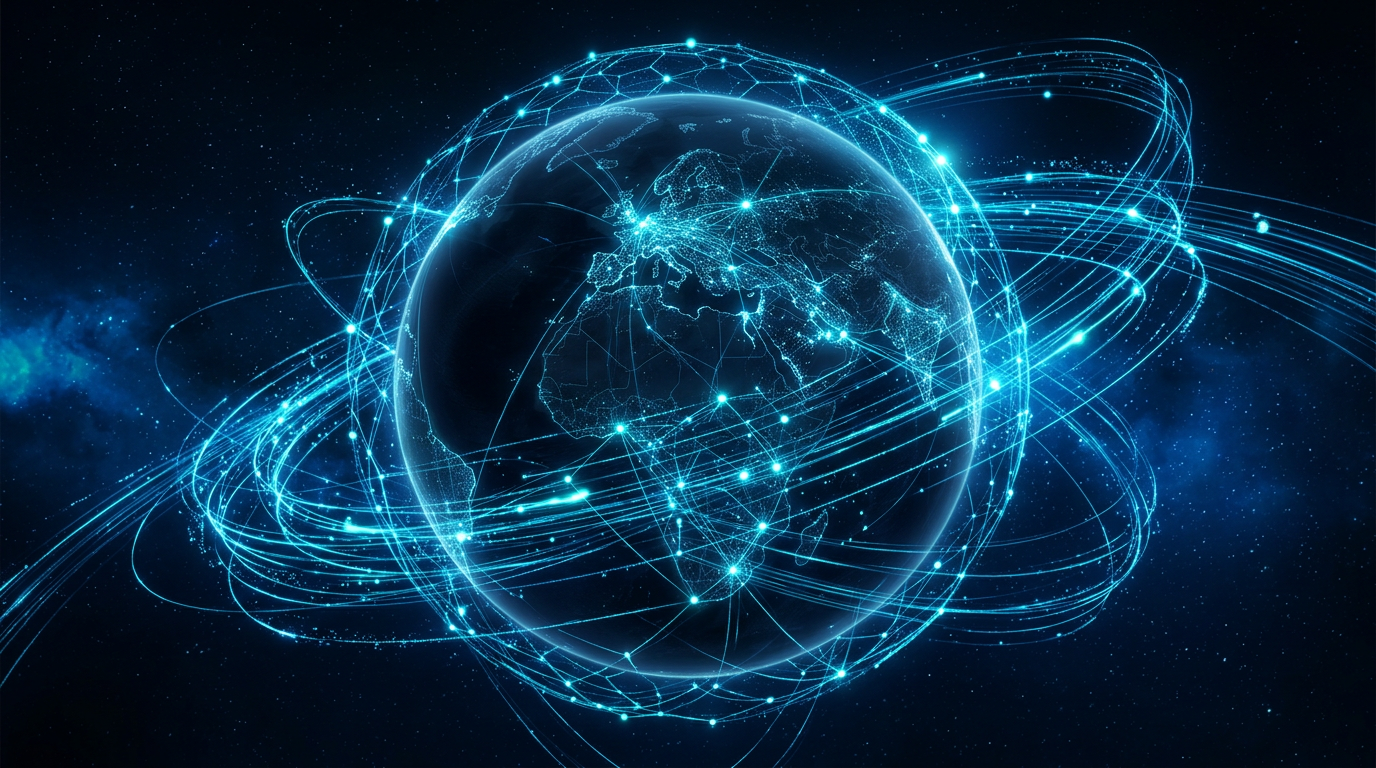
Reimagining Global Communication Through Decentralized Networks
The Dawn of a New Era in Connectivity
For decades, global communication has relied on a centralized model: cellular towers, SIM cards, and large telecommunication companies. While effective, this infrastructure presents significant challenges in terms of coverage, cost, resilience, and data privacy. AetherTelecom is at the forefront of a paradigm shift, developing a truly decentralized, peer-to-peer communication mesh designed to democratize access and secure digital interactions worldwide.
Why Decentralize Communication?
Traditional cellular networks, despite their ubiquity, have inherent limitations. Coverage gaps persist in rural areas and during disasters. The reliance on centralized infrastructure makes them vulnerable to outages and censorship. Furthermore, data privacy often depends on the policies of service providers, leading to concerns about surveillance and data breaches.
Overcoming Centralized Vulnerabilities
A decentralized network, by contrast, operates without a single point of failure. Each device acts as a node, capable of sending, receiving, and relaying data. This distributed architecture offers unparalleled resilience. If one node or a cluster goes offline, the network dynamically reroutes traffic, maintaining connectivity.
The Challenge of Universal Access
Billions of people remain unconnected or underserved by existing infrastructure. Deploying and maintaining cellular towers in remote or economically disadvantaged regions is often cost-prohibitive. A peer-to-peer mesh network leverages existing devices, creating a self-organizing and self-healing web of connectivity that can extend to the remotest corners of the globe, bypassing traditional infrastructure limitations.
AetherTelecom's Core Technologies: AI, Mesh, and Quantum Security
At the heart of AetherTelecom's vision are three foundational pillars: advanced AI-routing, a robust peer-to-peer mesh architecture, and state-of-the-art post-quantum cryptography. These elements combine to create a communication system that is not only resilient and universally accessible but also future-proof against emerging threats.
AI-Routed Device-to-Device Networking
The sheer complexity of a global, dynamic mesh network requires intelligent management. AetherTelecom employs sophisticated AI algorithms to optimize data routing across myriad devices. This AI dynamically assesses network conditions, device proximity, battery life, and data demand to establish the most efficient and secure communication paths. This ensures low latency and high bandwidth, even in congested or sparse network environments.
Eliminating SIM Cards: Device-Centric Identity
One of the most significant innovations is the complete removal of SIM cards. Instead, AetherTelecom leverages secure, hardware-bound cryptographic identities embedded directly into compatible devices. This not only streamlines user access but also enhances security and privacy by decentralizing identity management and removing reliance on cellular providers for authentication. Your device is your communication key.
Post-Quantum Cryptography for Future-Proof Security
As quantum computing advances, current encryption standards are at risk. AetherTelecom is proactively implementing post-quantum cryptography (PQC) across its entire stack. This ensures that all communications – from device authentication to data transmission – remain secure against even the most powerful future quantum attacks, safeguarding user privacy and data integrity for decades to come.
Key Facts About AetherTelecom's Vision
- Decentralized Architecture: Eliminates single points of failure, increasing network resilience and uptime.
- Peer-to-Peer Connectivity: Devices communicate directly, reducing reliance on centralized infrastructure.
- AI-Powered Routing: Intelligent algorithms optimize data paths for efficiency and reliability.
- SIM-Card Elimination: Replaces traditional SIMs with secure, device-bound cryptographic identities.
- Global Reach: Designed to provide universal connectivity, bridging the digital divide.
- Post-Quantum Cryptography: Implements advanced encryption to protect data from future quantum threats.
- Enhanced Privacy: User data remains private and secure through end-to-end PQC encryption.
- Cost-Effective: Lowers barriers to entry by reducing infrastructure and operational costs.
- Open Standard Potential: Aims to foster an ecosystem of compatible devices and services.
The Future of Global Communication with AetherTelecom
The implications of AetherTelecom's decentralized mesh network are profound. Imagine reliable communication in disaster zones, affordable internet access in remote villages, and truly private conversations free from surveillance. This isn't just an upgrade; it's a fundamental re-architecture of how humanity connects.
Empowering Users, Securing Data
By placing control back into the hands of users and their devices, AetherTelecom is building a more equitable and secure digital future. Our commitment to open standards, robust security, and inclusive access defines our mission: to create a global communication fabric that serves everyone, everywhere.
Join AetherTelecom as we build the next generation of communication – a network that is intelligent, resilient, and universally accessible.
Frequently Asked Questions
Frequently asked questions
- What problem does AetherTelecom's decentralized network solve?
- AetherTelecom addresses issues like patchy cellular coverage, high infrastructure costs, network vulnerability to outages or censorship, and concerns over data privacy inherent in traditional centralized communication systems. It aims to provide universal, resilient, and secure connectivity.
- How does AetherTelecom eliminate the need for SIM cards?
- AetherTelecom replaces physical SIM cards with secure, hardware-bound cryptographic identities embedded directly into compatible devices. This decentralizes user identity management, enhancing security and streamlining access without relying on traditional cellular providers.
- What is 'post-quantum cryptography' and why is it important for AetherTelecom?
- Post-quantum cryptography (PQC) refers to encryption methods designed to be secure against attacks from future quantum computers. AetherTelecom implements PQC to ensure all communications remain protected against these advanced threats, safeguarding user privacy and data integrity long-term.
- How does AI contribute to AetherTelecom's mesh network?
- AI plays a crucial role in dynamically routing data across the decentralized mesh network. It intelligently assesses factors like network conditions, device proximity, and battery life to determine the most efficient and secure paths for communication, ensuring optimal performance and reliability.
- Will AetherTelecom's network be accessible globally?
- Yes, AetherTelecom's core mission is to build a truly global communication mesh. By leveraging a peer-to-peer, device-to-device architecture, the network is designed to expand organically and provide connectivity even in remote or underserved regions, overcoming traditional infrastructure limitations.