How Devices Will Talk Without Towers in the Future — 2026-10-14
Discover how decentralized, AI-routed device-to-device networks and post-quantum cryptography will replace cellular towers and SIM cards, ushering in a new era of global, secure communication.
How Devices Will Talk Without Towers in the Future — 2026-10-14
For decades, our communication has relied on a centralized infrastructure of cell towers and SIM cards. This system, while revolutionary, presents inherent vulnerabilities and limitations: coverage gaps, high costs, and susceptibility to natural disasters or targeted attacks. The future of communication, however, is radically different. We are on the cusp of an era where devices will communicate directly, securely, and globally, free from the constraints of traditional cellular networks.
The Shift to Decentralized Peer-to-Peer Networks
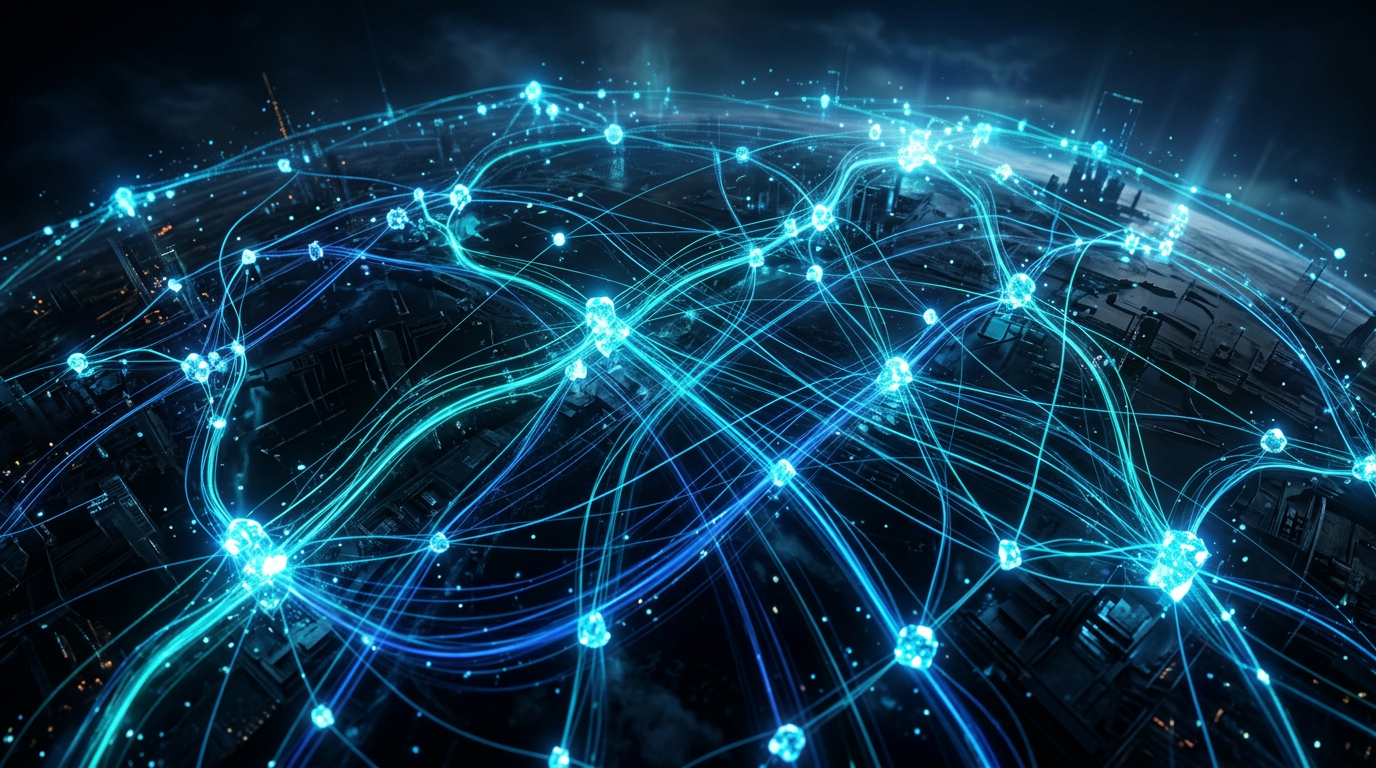
The fundamental change lies in decentralization. Instead of funneling all traffic through central towers, devices will form dynamic, self-healing mesh networks. Each device acts as both a transmitter and a receiver, forwarding data packets for its neighbors. This distributed approach builds an incredibly resilient network, where the failure of a single point does not compromise the entire system.
Why Peer-to-Peer is the Future
- Resilience: No single point of failure. The network adapts to outages.
- Coverage: Extends connectivity to remote areas without tower infrastructure.
- Efficiency: Optimizes local data transfer, reducing backhaul needs.
- Accessibility: Lowers barriers to entry for global communication services.
This paradigm shift is not just theoretical. Companies like AetherTelecom are actively developing the protocols and hardware to make this a reality, envisioning a world where your phone, IoT device, or vehicle can always connect, anywhere.
AI at the Core: Intelligent Routing and Optimization
Managing a global, constantly changing mesh network is a monumental task. This is where Artificial Intelligence becomes indispensable. AI algorithms will be the brain of these decentralized networks, dynamically routing data packets across the most efficient and secure paths.
Traditional networks rely on static routing tables or protocols designed for fixed infrastructure. A peer-to-peer mesh, however, is fluid. Devices join and leave, signal strength fluctuates, and obstructions appear. AI will learn from these conditions in real-time, predicting optimal routes, managing bandwidth, and even prioritizing critical communications.
AI's Role in Mesh Networking
- Dynamic Pathfinding: AI constantly evaluates and selects the best routes based on latency, signal strength, and network congestion.
- Self-Healing: When a device goes offline, AI reroutes traffic seamlessly, maintaining connectivity.
- Resource Management: Optimizes power consumption for individual devices by selecting energy-efficient communication paths.
- Threat Detection: Identifies anomalies and potential security breaches within the decentralized network.
AetherTelecom is pioneering AI-routed device-to-device networking, ensuring that every message finds its way through the most robust and efficient channels available, even in challenging environments.
Post-Quantum Cryptography: Securing Tomorrow's Conversations
As computing power advances, so do the capabilities of adversaries. The advent of quantum computers poses a significant threat to current encryption standards, which could render our most sensitive communications vulnerable. The future of communication demands proactive security measures: post-quantum cryptography (PQC).
Post-quantum cryptography refers to cryptographic algorithms that are secure against attacks by both classical and quantum computers. Integrating PQC into decentralized networks from the outset is crucial for long-term data integrity and privacy.
Why PQC is Non-Negotiable
- Future-Proof Security: Protects data against current and future quantum computing threats.
- End-to-End Encryption: Ensures that only the sender and intended recipient can access message content.
- Data Integrity: Guarantees that data has not been tampered with in transit.
- Identity Verification: Securely authenticates devices and users within the mesh.
At AetherTelecom, PQC is not an afterthought; it's a foundational pillar. Every device on our network will employ state-of-the-art post-quantum algorithms to safeguard your privacy and security, from the moment a message is sent to when it's received.
Goodbye SIM Cards, Hello Digital Identity
The SIM card, a physical identifier tied to a specific carrier, will become obsolete. In a decentralized peer-to-peer network, identity will be managed digitally and securely, often leveraging blockchain-like principles or secure distributed ledgers.
Your device itself, coupled with unique cryptographic keys, will serve as your identifier. This approach offers several advantages:
- Global Roaming: No more roaming charges or needing local SIMs. Your identity works everywhere.
- Enhanced Security: Digital identities can be more resilient to cloning and unauthorized access.
- User Control: Greater autonomy over your personal communication data and identity.
- Flexibility: Easily switch service providers or manage multiple communication profiles without physical card swaps.
This shift simplifies connectivity and empowers users with more control over their digital presence within the network.
Key Facts About the Future of Communication
- Decentralized Architecture: Communication moves from central towers to peer-to-peer device meshes.
- AI Routing: Artificial Intelligence dynamically optimizes data paths, ensuring resilient and efficient connectivity.
- Post-Quantum Security: All communications are protected by cryptography resistant to future quantum computer attacks.
- No SIM Cards: Physical SIMs are replaced by secure, digital, device-based identities.
- Global Coverage: The mesh network extends connectivity anywhere devices can form a link, transcending geographical limits.
- Enhanced Resilience: Networks become inherently more resistant to outages, natural disasters, or censorship.
The AetherTelecom Vision: A Connected World for All
AetherTelecom is committed to building this future today. Our technology fuses advanced AI, peer-to-peer networking, and post-quantum cryptography to create a truly global, decentralized communication mesh. Imagine a world where:
- Emergency responders communicate seamlessly in disaster zones where traditional networks fail.
- Remote communities gain access to reliable internet and communication for the first time.
- IoT devices operate efficiently and securely on a global scale, without needing cellular subscriptions.
- Everyone has the freedom to connect, share, and communicate, regardless of location or geopolitical boundaries.
This isn't just about faster internet; it's about fundamentally rethinking how we connect, securing our digital future, and ensuring equitable access to information for everyone, everywhere. Join us as we build the next generation of global communication.
Frequently asked questions
- How will devices communicate without cellular towers?
- Devices will form decentralized, peer-to-peer mesh networks, where each device acts as a relay, forwarding data for others. AI algorithms will intelligently route traffic across these dynamic connections, eliminating reliance on centralized tower infrastructure.
- What is AI routing in a communication mesh?
- AI routing uses advanced algorithms to dynamically determine the most efficient and resilient paths for data packets in a constantly changing mesh network. It optimizes for factors like latency, signal strength, and network congestion, enabling self-healing and adaptive connectivity.
- Why is post-quantum cryptography necessary for future communication?
- Post-quantum cryptography (PQC) is essential to secure communications against the threat of future quantum computers, which could break current encryption standards. Integrating PQC ensures long-term data privacy and integrity in a decentralized global network.
- Will I still need a SIM card in this new system?
- No, physical SIM cards will become obsolete. Your device's identity will be managed digitally using secure cryptographic keys, allowing for seamless global connectivity without carrier-specific SIMs or roaming charges.
- What are the main benefits of AetherTelecom's decentralized network?
- AetherTelecom's network offers unparalleled resilience due to its decentralized, self-healing design, global coverage in areas traditional networks can't reach, and robust, future-proof security through post-quantum cryptography. It aims to provide equitable, secure access to communication worldwide.